Customer Helpline:


How to Choose the Right Commercial Crepe Maker for Your Food Business in New Zealand?

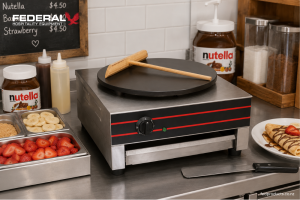
Crepes continue to grow in popularity across New Zealand’s hospitality sector, appearing in cafés, dessert venues, food trucks, event catering operations, hotels, and tourist-focused dining businesses. Their fast preparation time, menu flexibility, and strong profit potential make them a practical addition for operators seeking to diversify revenue streams.
The equipment selected to produce crepes directly affects consistency, service speed, operating costs, and overall kitchen efficiency. An unsuitable unit can create operational slowdowns, increase maintenance requirements, and lead to an inconsistent customer experience. Whether operating an Auckland café, a Wellington food truck, a Christchurch restaurant, or a Queenstown hospitality venue, selecting the correct professional crepe maker is critical for operational success.
Key Takeaways
| Decision Area | Recommendation |
|---|---|
| Power Source | Choose electric for indoor fixed kitchens and gas for mobile operations. |
| Production Volume | Match output capacity to expected daily service. |
| Plate Material | Prioritise seasoned cast iron for durability and consistent heat. |
| Plate Configuration | Use single-plate units for lower-volume menus and double-plate units for peak service demand. |
| Temperature Control | Look for steady thermostatic control to reduce uneven cooking and improve consistency. |
| Maintenance Access | Choose models with easy-clean stainless steel surfaces and accessible controls. |
Why Does Choosing The Right Crepe Machine Matter?
Commercial crepe equipment is designed to maintain stable cooking temperatures and support continuous operation during peak trading periods. Unlike domestic appliances, professional units are built for repeatable output, faster recovery times, and higher durability.
The right industrial crepe or waffle maker improves kitchen workflow, supports consistent product quality, reduces staff intervention, and contributes to smoother customer service.
For food businesses, a commercial crepe maker is not only a cooking appliance. It is a production tool that affects queue times, menu consistency, staff training, energy use, cleaning time, and customer satisfaction. A reliable machine allows operators to prepare sweet crepes, savoury galettes, breakfast items, desserts, and event-style menu items with more confidence.
Operational Benefits of Choosing the Right Crepe Maker
| Business Outcome | How the Right Unit Helps |
|---|---|
| Consistent cooking | Stable plate temperature helps reduce burnt edges, pale centres, and uneven browning. |
| Faster service | Good heat recovery helps staff prepare crepes quickly during peak periods. |
| Menu flexibility | Suitable plate size and temperature range support sweet, savoury, and dessert applications. |
| Lower labour pressure | Predictable performance makes staff training easier and reduces constant manual adjustment. |
| Better long-term value | Durable materials and easy maintenance reduce repair and replacement risks. |
Should You Choose An Electric Or Gas Crepe Maker?
Power source is one of the first purchasing decisions. Electric units are commonly selected by New Zealand cafés, restaurants, and hotels because they provide precise temperature control and straightforward installation.
Mobile operators often prefer gas-powered crepe makers for sale because they offer flexibility where fixed electrical infrastructure is limited.
Gas vs Electric Comparison
| Feature | Electric Crepe Maker | Gas Crepe Maker |
|---|---|---|
| Installation | Ready for immediate use with a standard NZ power outlet | Requires gas installation |
| Temperature Control | Highly precise | Fast heating response |
| Energy Source | Electricity | Liquefied Petroleum Gas (LPG) or Natural Gas |
| Mobility | Best for fixed kitchens | Suitable for mobile operations |
| Maintenance | Lower maintenance complexity | Requires gas system inspection |
| Best For | Cafés, restaurants, hotels | Food trucks, outdoor catering |
Pros and Cons Snapshot
| Option | Advantages | Considerations |
|---|---|---|
| Electric | Stable temperature, easier staff training | Requires electrical access |
| Gas | Faster heat response, mobility | Additional compliance requirements |
New Zealand installation note: Confirm whether the unit requires a standard NZ 10-amp plug or a commercial 15-amp connection before purchase.
Do You Need A Single-Plate Or Double-Plate Configuration?
Plate configuration should be selected independently of the power source. Single-plate units suit businesses where crepes are an additional menu item. Double-plate systems support higher output and reduce waiting times during peak periods.
If your business only serves crepes occasionally, a compact single-plate unit may provide enough capacity without taking up unnecessary bench space. If crepes are a core menu item, a double-plate configuration can help maintain speed and consistency when orders arrive quickly.
| Business Type | Recommended Configuration |
|---|---|
| Small Café | Single Plate |
| Coffee Shop | Single Plate |
| Dessert Venue | Double Plate |
| Food Truck | Double Plate |
| Hotel Buffet | Double Plate |
| Event Catering | Double Plate |
How Many Crepes Do You Plan To Serve Daily?
Production requirements should determine equipment capacity. Businesses serving under 50 crepes daily typically operate efficiently with compact single-plate equipment.
Businesses expecting high-volume demand should invest in greater capacity from the outset to support future growth and reduce upgrade costs. When you buy crepe makers online, according to realistic service volume, they improve labour efficiency and reduce unnecessary capital expenditure.
Daily Output Planning Guide
| Expected Daily Crepe Volume | Recommended Setup | Best Suited For |
|---|---|---|
| Under 50 crepes per day | Single-plate electric unit | Cafés, coffee shops, small dessert menus |
| 50-150 crepes per day | High-performance single plate or double plate | Dessert venues, restaurants, busy cafés |
| 150+ crepes per day | Double-plate commercial unit | Food trucks, hotel buffets, events, tourist venues |
What Plate Size Should You Choose?
The dimension of the food preparation surface directly affects menu capability. Most heavy-duty crepe models offer cooking diameters between 350 and 400 millimetres. Smaller plates support compact menu items and breakfast portions.
Larger plates enable efficient preparation of premium desserts and traditional French-style crepes. Match plate diameter to actual serving size rather than selecting the largest available option.
Plate Size Planning
| Plate Size | Typical Use | Business Fit |
|---|---|---|
| Smaller commercial plates | Breakfast crepes, compact servings, quick snacks | Small cafés and coffee shops |
| 350mm plates | Standard sweet and savoury crepes | Cafés, food trucks, dessert venues |
| 400mm plates | Large dessert crepes and traditional French-style crepes | High-volume venues and premium dessert operations |
What Temperature Range Should A Commercial Unit Provide?
Temperature control determines cooking consistency. Look for food prep equipment capable of operating between 50°C and 300°C, with responsive thermostatic controls that maintain steady heat throughout service.
Consistent heat prevents burnt edges, undercooked centres, and uneven browning. Flexible temperature management also enables menu growth into items such as:
- Sweet crepes
- Galettes, also known as savoury buckwheat crepes
- Pancakes
- Dessert applications
Why Temperature Stability Matters
| Cooking Issue | Likely Cause | How Better Temperature Control Helps |
|---|---|---|
| Burnt edges | Plate too hot or uneven heating | Responsive controls help maintain a stable surface temperature. |
| Undercooked centres | Insufficient heat recovery | Commercial heating systems recover faster between batches. |
| Uneven browning | Poor heat distribution | Quality plates distribute heat more evenly across the surface. |
| Slow service | Weak output during peak periods | Higher-performance units maintain production speed. |
Which Construction Materials Deliver The Best Long-Term Value?
What Body Material Should You Prioritise?
Stainless steel remains the preferred exterior material due to its corrosion resistance, durability, and ease of cleaning.
Why Does Plate Material Matter?
Seasoned cast-iron plates provide excellent heat retention and consistent cooking performance across the entire surface. Non-stick coated crepe makers in New Zealand may require replacement sooner under heavy commercial use.
| Component | Recommended Material |
|---|---|
| Exterior Body | Stainless Steel |
| Cooking Plate | Seasoned Cast Iron |
| Controls | Heavy-Duty Commercial Grade |
| Feet | Non-Slip Adjustable |
| Internal Systems | Commercial Electrical Components |
What Are The Space Requirements For a Commercial Unit?
Kitchen layout directly affects productivity. Measure available bench dimensions before purchasing and allow sufficient clearance for ventilation, cleaning access, and safe operation.
Food trucks and compact cafés benefit from units with a compact design that saves bench space while maintaining the required production output. You can gain further insights by reaching out to the top crepe maker dealers and distributors in your area.
Space Planning Checklist
| Measurement Area | Why It Matters |
|---|---|
| Bench width | Confirms the unit fits safely in the work area. |
| Bench depth | Allows room for spreading, plating, and topping preparation. |
| Ventilation clearance | Supports safe heat management during service. |
| Operator clearance | Allows staff to work comfortably and safely. |
| Cleaning access | Reduces end-of-service labour time. |
| Nearby topping station | Improves workflow and service speed. |
How Do You Season a Cast-Iron Crepe Plate?
Seasoning safeguards the food prep surface and enhances performance. A properly seasoned cast-iron plate helps create smoother release, more consistent browning, and better long-term durability.
Quick Seasoning Guide
| Step | Action |
|---|---|
| 1 | Clean and dry the plate thoroughly. |
| 2 | Apply a thin layer of cooking oil. |
| 3 | Heat gradually until the oil bonds with the surface. |
| 4 | Allow cooling. |
| 5 | Repeat two to three times before first use. |
Re-season periodically to maintain non-stick performance and extend equipment lifespan.
What Maintenance Routine Should Operators Follow?
Regular maintenance protects performance and food safety compliance. A consistent routine also helps staff identify problems early, such as uneven heating, loose controls, grease build-up, or plate-level issues.
Maintenance Checklist
- Wipe cooking surface after each service
- Inspect controls and connections weekly
- Remove grease build-up
- Confirm plate remains level
- Re-season cast iron when required
- Schedule professional servicing where applicable
When you shop for crepe makers, look for models with easy-to-clean stainless steel surfaces to reduce labour time and support hygiene standards.
How Important Is Energy Efficiency?
Energy performance directly influences operating costs. Modern units, such as the titular ones and pie warmers, use improved insulation, efficient heating systems, and accurate temperature regulation to reduce unnecessary energy consumption. Lower operating costs over the equipment lifecycle often offset higher purchase prices.
Energy Efficiency Factors to Compare
| Feature | Why It Matters |
|---|---|
| Accurate thermostat | Reduces overheating and unnecessary energy use. |
| Fast heat recovery | Maintains production speed without excessive preheating. |
| Quality plate material | Improves heat retention and reduces temperature fluctuation. |
| Commercial build quality | Supports stable performance over long trading periods. |
| Correct unit size | Prevents unnecessary energy use from oversized equipment. |
Which Crepe Maker Suits Your Business Model?
The best crepe maker depends on how, where, and when your business serves customers. A food truck operating at events needs a different setup from a hotel breakfast operation or a fixed café dessert station.
Food Truck Example
A Wellington food truck operating at events benefits from:
- Gas-powered operation
- Double-plate configuration
- Compact footprint
- Rapid heat recovery
Hotel Example
A Queenstown hotel breakfast operation benefits from:
- Electric power
- Double-plate setup
- Large cast iron surface
- Precise temperature management
Business Model Comparison
| Business Type | Recommended Setup | Main Priority |
|---|---|---|
| Café | Electric single-plate or compact double-plate unit | Consistency, bench space, staff training |
| Dessert Venue | Electric double-plate unit | High output and presentation quality |
| Food Truck | Gas double-plate unit | Mobility, fast heat recovery, compact footprint |
| Hotel Buffet | Electric double-plate unit | Reliable breakfast service and precise temperature control |
| Event Catering | Gas or electric double-plate unit | Output speed and flexible setup |
Common Mistakes When Buying a Commercial Crepe Maker
| Common Mistake | Potential Problem | Better Approach |
|---|---|---|
| Choosing based only on price | Higher maintenance costs or lower performance over time. | Compare plate quality, temperature control, construction, and servicing access. |
| Selecting the largest plate automatically | Wasted bench space and unnecessary energy use. | Match plate size to actual menu portions. |
| Ignoring production volume | Slow service during peak periods. | Choose single or double plate based on expected daily demand. |
| Not checking power requirements | Installation delays or unexpected electrical costs. | Confirm 10-amp, 15-amp, gas, LPG, or Natural Gas requirements before purchase. |
| Overlooking cleaning access | Higher labour time and hygiene challenges. | Prioritise stainless steel surfaces and easy-clean designs. |
Buyer Checklist Before Purchasing
- Confirm expected daily crepe volume.
- Decide whether crepes are a core menu item or an add-on.
- Choose between electric and gas operation.
- Check whether the site supports NZ 10-amp, 15-amp, LPG, or Natural Gas requirements.
- Select single-plate or double-plate configuration.
- Match plate diameter to your intended serving size.
- Prioritise seasoned cast iron for heat retention and durability.
- Measure bench space and operator clearance.
- Review cleaning and seasoning requirements.
- Compare estimated operating costs.
- Check warranty, servicing, and parts availability.
Conclusion
Selecting the right commercial crepe maker involves balancing power source, output requirements, plate size, temperature performance, construction quality, maintenance expectations, and future expansion goals.
For New Zealand hospitality operators, the best culinary investment is equipment that delivers reliable production, operational efficiency, and long-term value. Choosing with clear performance benchmarks today creates stronger service capability for years to come.
Whether your business operates from a café, food truck, restaurant, hotel, dessert venue, or event catering setup, the right commercial crepe maker can improve consistency, reduce service pressure, expand menu opportunities, and support better customer experiences.
FAQs: Commercial Crepe Makers
1. Is an electric or gas crepe maker better?
Electric crepe makers are often better for fixed indoor kitchens because they offer precise temperature control and easier installation. Gas crepe makers are useful for mobile operations, outdoor catering, and sites without suitable electrical infrastructure.
2. What plate material is best for a commercial crepe maker?
Seasoned cast iron is generally preferred for commercial use because it retains heat well and supports consistent cooking across the plate surface.
3. Do I need a single-plate or double-plate crepe maker?
A single-plate unit suits lower-volume cafés and coffee shops, while a double-plate unit is better for dessert venues, food trucks, hotel buffets, and event catering operations.
4. What temperature range should a commercial crepe maker offer?
A suitable commercial unit should generally support a broad range around 50°C to 300°C with responsive thermostatic control for consistent cooking.
5. How do you season a cast-iron crepe plate?
Clean and dry the plate, apply a thin layer of cooking oil, heat gradually until the oil bonds with the surface, allow it to cool, and repeat the process two to three times before first use.
6. What size crepe plate should I choose?
Most commercial crepe plates range from about 350mm to 400mm. Choose based on your serving size, menu style, bench space, and expected production volume.
7. How can a commercial crepe maker reduce operating costs?
A well-matched unit with accurate temperature control, strong heat retention, suitable plate size, and durable construction can reduce wasted energy, improve service speed, and lower long-term maintenance costs.