Customer Helpline:


Display Cabinets
-
Posted: June 25, 2026Categories: Display Cabinets
 Read more »
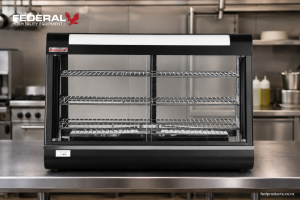
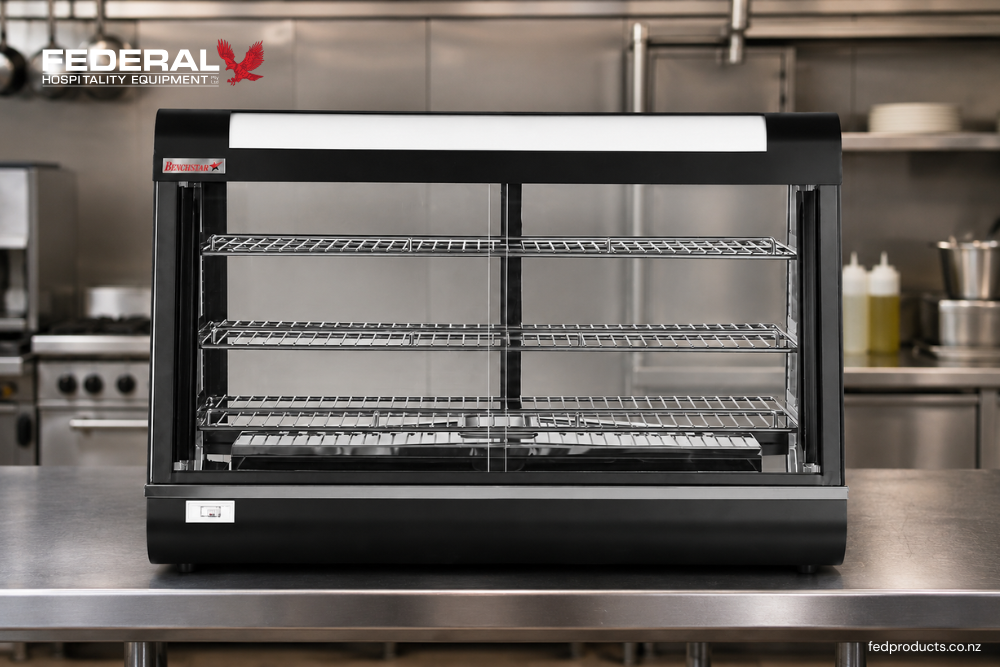
A hot food countertop is one of the most practical pieces of service equipment in a commercial kitchen. Also known as a heated display unit, countertop food warmer, or commercial bain marie, it helps keep prepared food warm, organised, accessible, and ready for service during busy operating periods.
Across New Zealand, these units are commonly used in restaurants, cafés, bakeries, catering businesses, hotels, schools, hospitals, aged care kitchens, takeaway shops, and food service facilities where hot meals need to be held safely and served efficiently.
Choosing the correct size is not simply a matter of buying the largest model available. The right footprint should support your menu, service volume, bench layout, food holding requirements, and future business plans. An undersized unit can create pressure during peak service, while an oversized model may increase energy costs, waste bench space, and make daily workflow less efficient.
For Federal Hospitality Equipment New Zealand customers, correct sizing usually comes down to three practical questions: how much food needs to be held during peak service, how much bench space is available, and how much flexibility is required for future menu changes.
Quick Answer: Choose a hot food countertop based on peak service volume, GN pan configuration, available bench width and depth, power access, staff workflow, temperature holding needs, and future menu plans. The best unit is not always the largest one. It is the model that holds enough food for your busiest service period while fitting comfortably into your kitchen layout and operating efficiently.Key Takeaways: Choosing the Right Hot Food Countertop Size
Decision Area What to Check Why It Matters Peak Service Demand Analyse your busiest meal periods. Ensures the unit can hold enough food when demand is highest. Bench Space Measure width, depth, clearance, ventilation space, and access. Prevents the unit from blocking preparation areas or staff movement. GN Pan Layout Choose a pan configuration that matches your menu. Helps separate dishes properly and improve presentation. Menu Flexibility Allow room for future menu changes. Reduces the need to replace equipment too soon. Energy Efficiency Match size to actual usage. Avoids heating unused space and increasing running costs. Food Safety Support consistent hot holding temperatures. Helps maintain meal quality and safe service practices. Why Correct Sizing Matters More Than Most Buyers Realise?
A hot food countertop does more than hold food warm. It influences service speed, food presentation, kitchen organisation, staff movement, and temperature consistency. In a busy hospitality environment, small sizing mistakes can quickly create larger operational problems.
If the unit is too small, staff may overcrowd pans, refill too frequently, struggle to maintain consistent presentation, or hold different menu items too close together. This can slow service and affect food quality.
If the unit is too large, it can occupy valuable bench space, increase energy use, and make the preparation area less practical. In compact New Zealand commercial kitchens, bench space is often limited, so every piece of equipment needs to justify its footprint.
Kitchen Requirement Impact on Unit Size Daily meal production volume Determines the required holding capacity. Number of menu items Influences the number of food compartments needed. Available bench space Controls the physical footprint. Service style Determines display, access, and replenishment requirements. Future menu expansion Affects long-term suitability. Expert Insight: Many businesses choose hot holding equipment based on current menu size only. A better approach is to assess peak demand, menu rotation, refill patterns, and possible future dishes before selecting the final size.Start With Your Service Volume, Not the Equipment Catalogue
The correct holding capacity is determined by your busiest service period, not your average daily operation. A café may only need a compact unit during quiet hours, but lunch rushes, weekend trade, school holidays, catering orders, or event days may require more holding space.
Before choosing equipment sourced from the top hot food countertop suppliers and manufacturers, review how your kitchen actually serves food during peak demand.
Questions to Ask Before Choosing Capacity
Assessment Area Question to Answer Why It Matters Meal Volume How many portions must be held at one time? Helps determine total pan capacity. Menu Variety How many hot dishes need separate sections? Prevents cross-over between different food items. Replenishment Frequency How often will staff refill trays? Balances holding capacity with freshness. Backup Requirements Do you need spare space during busy periods? Provides flexibility during demand spikes. Service Duration How long will dishes remain on display or service? Helps decide whether larger holding capacity is justified. Improper capacity planning can lead to overcrowded pans, inconsistent food presentation, slower service, and difficulty maintaining stable hot holding conditions.
Understanding GN Pan Configurations Before You Buy
GN stands for Gastronorm, the standard sizing system used for commercial kitchen pans and trays. GN sizing helps catering and food service operators choose equipment based on usable holding space rather than external dimensions alone.
When you buy a hot food countertop online, the GN pan layout is one of the most important specifications to review. Two countertop units may have similar external dimensions but very different practical capacity depending on the pan configuration.
Common GN Pan Sizes and Applications
GN Pan Size Typical Application Best Use GN 1/1 Main dishes and high-volume foods. Rice, pasta, curries, roasted vegetables, large meal batches. GN 1/2 Side dishes and medium quantities. Vegetables, sauces, small mains, breakfast items. GN 1/3 Smaller menu items, sauces, and toppings. Menu variety, small-batch service, rotating dishes. GN 1/6 Garnishes and condiments. Small accompaniments, toppings, sauces, and finishing items. A restaurant offering several main meals requires a different GN configuration from a bakery displaying pies and pastries. Choosing the right pan arrangement ensures that equipment, like ambient display cabinets, provides useful service capacity rather than unused holding space.
Planning Tip: Sketch your menu into GN pan sizes before choosing the unit. This simple step often reveals whether you need fewer large pans, more smaller compartments, or a flexible combination.How Bench Space Influences Productivity?
Hot food countertops are designed to sit on benches, counters, or service surfaces, so available space is just as important as food capacity. A larger unit may seem useful, but it becomes a problem if it blocks preparation space, restricts customer service, or makes cleaning difficult.
Before selecting a model, measure the full installation area and think about how staff will move around the unit during service.
What to Measure Before Purchasing
Measurement Why It Matters Bench Width Confirms the unit fits the available workspace. Bench Depth Prevents obstruction of preparation and plating areas. Clearance Space Allows safe staff movement and easy cleaning access. Ventilation Area Supports heat management around the equipment. Power Access Confirms practical installation without costly electrical changes. When checking power requirements in New Zealand, confirm whether the unit requires a standard 10-amp plug or a higher-capacity 15-amp connection. Matching electrical requirements before installation helps avoid delays and unnecessary costs.
Expert Insight: A unit that fits physically may still be the wrong choice if it disrupts workflow. Always assess how staff will refill pans, serve customers, clean the bench, and access nearby preparation areas.Which Size Hot Food Countertop Suits Your Type of Business?
Different food service operations have different holding requirements. A bakery displaying hot pastries does not need the same configuration as a hotel buffet or catering kitchen. The right size depends on the service model, menu variety, customer volume, and replenishment pattern.
Business Type Suitable Sizing Approach Practical Consideration Small Café Compact unit that maximises bench efficiency. Ideal for limited menus, breakfast items, or small hot meal selections. Restaurant Medium capacity based on menu range. Useful for holding sides, prepared meals, and service-ready dishes. Catering Business Larger holding area for flexible service. Supports varied menus and higher-volume food production. Hotel Buffet Wide display area with multiple sections. Improves guest access, presentation, and menu variety. Bakery Compact heated display focused on presentation. Suitable for pies, pastries, savouries, and hot snacks. School or Hospital Kitchen Capacity selected around meal service windows. Helps support scheduled service and portion control. Planning for Tomorrow's Menu, Not Just Today's
Future planning matters because hospitality businesses often change over time. Menus expand, customer numbers grow, catering opportunities increase, and new service styles may be introduced.
You can gain further insights by contacting leading hot food countertop dealers and distributors in your area.
A slightly larger capacity unit may be suitable when:
- Menu expansion is planned.
- Busy periods regularly exceed current capacity.
- Catering demand is increasing.
- More menu variety will be introduced.
- New service styles such as buffet, takeaway, or grab-and-go hot meals are being considered.
However, purchasing a significantly oversized unit can create an unnecessary footprint and higher operating costs. The ideal choice provides useful flexibility without paying for unused capacity.
Compact vs Large Hot Food Countertops
Both compact and large-capacity units can be the right choice depending on the business. The key is matching the equipment to real service requirements rather than assuming bigger is always better.
Unit Type Advantages Limitations Compact Unit Saves bench space, reduces operating costs, suits smaller menus, easier to place in tight kitchens. Limited capacity during busy periods and less flexibility for menu expansion. Large Capacity Unit Handles higher volume, supports menu variety, improves service flexibility. Requires more space, uses more energy, and may be inefficient if underused. Does a Larger Hot Food Countertop Increase Energy Costs?
Yes. Oversized equipment can increase energy consumption because a larger heated area requires more power to maintain temperature. This is especially important for businesses operating equipment for long periods each day.
Correct sizing improves efficiency by reducing unnecessary heat loss and avoiding unused holding space. Rather than choosing the largest available model, select a unit that matches your service needs while maintaining enough flexibility for realistic growth.
Energy and Performance Features to Compare
Feature Benefit Quality Insulation Reduces heat escaping from the unit. Accurate Temperature Controls Supports consistent meal holding. Stainless Steel Construction Improves durability, hygiene, and cleaning efficiency. Efficient Heating System Helps reduce operating costs. Correct GN Layout Reduces wasted heated space and improves service practicality. In New Zealand, hospitality businesses must also consider food safety expectations. Under Ministry for Primary Industries guidance, hot dishes generally need to be maintained at safe temperatures, with many operations targeting 60°C or above for hot holding. When you shop for hot food countertop options in the right size, the unit helps distribute menu items properly rather than overcrowding trays.
Food Safety and Temperature Holding Considerations
Hot food countertops should support safe food holding practices by maintaining suitable temperatures and allowing enough space for food to be displayed without overcrowding. Overfilled pans, poor layout, and frequent lid openings can make temperature management more difficult.
Correct sizing supports food safety by helping staff:
- Separate different dishes properly.
- Avoid overfilling pans.
- Maintain better heat distribution.
- Refill food at sensible intervals.
- Monitor holding temperatures more effectively.
- Maintain cleaner and more organised service areas.
Food Safety Tip: Equipment size should support your food safety process. A smaller unit may be acceptable if food is replenished frequently, while longer service periods may require more holding capacity and better separation.Common Mistakes When Buying a Hot Food Countertop
Common Mistake Potential Problem Better Approach Choosing the largest unit automatically. Higher energy costs and wasted bench space. Choose based on peak service needs and GN layout. Buying only for average demand. Capacity shortages during lunch rushes or events. Assess your busiest service periods. Ignoring bench depth. The unit may block preparation or plating areas. Measure the full installation space before purchase. Overlooking power requirements. Installation delays or electrical upgrades. Confirm 10-amp or 15-amp requirements in advance. Selecting the wrong GN pan configuration. Unused space or poor menu separation. Map your menu to pan sizes before ordering. Not planning for future menu changes. The unit may become restrictive too soon. Allow practical growth capacity without oversizing. Commercial Buyer Checklist
Before purchasing a hot food countertop, confirm:
- Your busiest service period has been reviewed.
- Required holding capacity has been calculated.
- Menu items have been matched to GN pan sizes.
- Bench width and depth have been measured.
- Staff clearance and cleaning access have been considered.
- Ventilation and heat management have been reviewed.
- Power access has been confirmed.
- 10-amp or 15-amp requirements have been checked.
- Future menu growth has been considered.
- Energy efficiency and insulation quality have been reviewed.
- Food safety processes support the chosen unit size.
- The unit supports service workflow rather than interrupting it.
Why Choose Federal Hospitality Equipment New Zealand?
Federal Hospitality Equipment New Zealand supplies commercial kitchen and food service equipment for restaurants, cafés, bakeries, catering businesses, hotels, schools, hospitals, and hospitality operators throughout New Zealand.
When selecting a hot food countertop, the best result comes from matching equipment to real operational needs. That means considering holding capacity, GN pan configuration, bench space, power requirements, food safety expectations, and future menu flexibility before purchase.
Federal Hospitality Equipment New Zealand helps hospitality businesses choose equipment that supports efficient service, reliable food holding, practical workflow, and long-term operating value.
Conclusion
Choosing the right hot food countertop size is a balance between holding capacity, physical footprint, and future flexibility. The most effective unit is not simply the largest or the cheapest. It is the one that supports efficient meal preparation, safe hot holding, and smooth service during your busiest operating periods.
For New Zealand commercial kitchens, correct sizing can improve workflow, support food safety practices, reduce wasted bench space, and help control operating costs.
Before investing, analyse your peak service periods, measure your installation space, confirm power access, and select a GN configuration that matches your menu. The right-sized heated or sushi display unit can become a reliable part of a more organised, efficient, and productive kitchen.
Frequently Asked Questions
What is a hot food countertop used for?
A hot food countertop is used to hold prepared food warm and ready for service. It is commonly used in cafés, restaurants, bakeries, catering businesses, buffets, schools, hospitals, and takeaway operations.
How do I choose the right size hot food countertop?
Start by reviewing your busiest service period, the number of hot dishes you serve, how often food is replenished, and how much bench space is available. Then choose a GN pan configuration that matches your menu.
Is a larger hot food countertop always better?
No. A larger unit may offer more capacity, but it can also increase energy use and take up valuable bench space. The right size should balance capacity, workflow, and operating cost.
What GN pan size should I choose?
GN 1/1 pans suit high-volume main dishes, GN 1/2 pans suit medium quantities, GN 1/3 pans suit smaller menu items, and GN 1/6 pans are useful for sauces, condiments, and garnishes.
What temperature should
-
Posted: June 25, 2026Categories: Display Cabinets
 Read more »
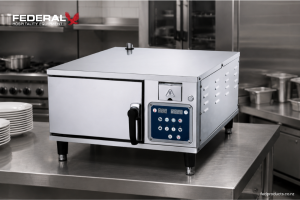
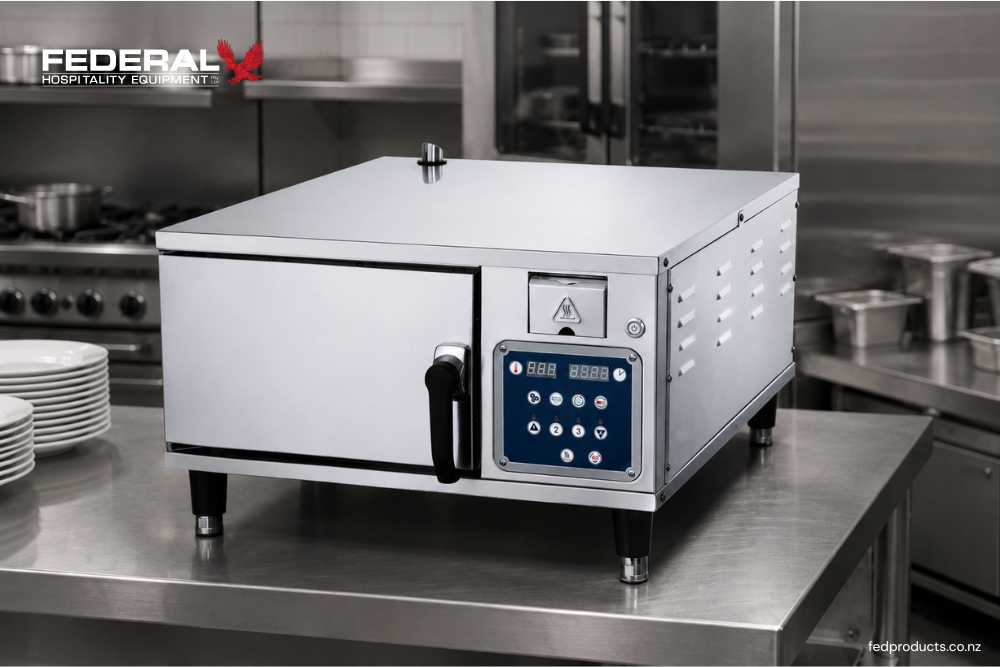
A commercial steamer display cabinet is a specialised foodservice unit designed to keep prepared food warm while helping maintain moisture, texture, and presentation quality during service. Unlike a standard heated display cabinet or bain-marie, a steam-heated display uses controlled heat and humidity to reduce moisture loss, making it especially useful for foods that can dry out under conventional dry heat.
For cafés, bakeries, takeaway outlets, restaurants, supermarkets, hotels, and catering businesses across New Zealand, choosing the right moist-heat display unit is a practical equipment decision. The correct cabinet can support smoother service, better food presentation, reduced waste, and more consistent customer experience. The wrong unit can create overcrowding, uneven holding conditions, unnecessary energy use, and cleaning challenges.
This guide explains the key commercial buying considerations New Zealand hospitality operators should review before investing in a steamer display cabinet, including food compatibility, capacity, humidity performance, layout, cleaning, power requirements, operating costs, and long-term support.
Quick Answer: The best commercial steamer display cabinet should match your food type, peak service volume, available counter or floor space, humidity requirements, tray configuration, electrical capacity, and cleaning routine. Choose a unit that keeps food warm and visually appealing without drying it out, while fitting naturally into your kitchen workflow and service style.Key Takeaways Before Buying
Buying Consideration Why It Matters Best Practice Food type Not every food benefits from humidified holding. Use steam display for foods that need moisture retention. Cabinet capacity Determines whether the unit can support peak service. Size the cabinet around your busiest trading periods. Humidity control Helps reduce drying and texture loss. Choose stable heat and moisture performance. Tray layout Affects menu organisation and refill speed. Match shelf or GN pan layout to your menu. Cleaning access Supports hygiene routines and daily maintenance. Prioritise removable trays and smooth surfaces. Power requirements Impacts installation and operating reliability. Confirm 10-amp or 15-amp connection needs before purchase. Supplier support Reduces downtime and repair delays. Check warranty, parts, and service availability. What Is a Commercial Steamer Display Cabinet?
A commercial steamer display cabinet for sale is a heated food presentation unit that combines temperature control with controlled atmospheric moisture. This humidified environment helps food retain its softness, appearance, and serving quality for longer than many dry heated displays.
These units are commonly used for pies, dumplings, rice dishes, filled pastries, ready-to-eat meals, buffet foods, and takeaway items. They are especially useful when food needs to remain warm and appetising during display or service without becoming dry, tough, or visually unappealing.
Business Type Common Applications Why a Steamer Display Helps Cafés Pies, savoury snacks, ready-to-eat meals. Maintains warmth and improves service readiness. Bakeries Filled rolls, pastries, savouries, local baked products. Helps reduce dryness during display. Restaurants Dumplings, rice dishes, prepared meals. Supports texture and portion consistency. Hotels Buffet service and hot meal presentation. Improves display quality across longer service windows. Catering businesses High-volume prepared food holding. Supports efficient batch service. Supermarkets Self-service hot food displays. Improves visibility and customer convenience. A steamer display cabinet is different from a bain-marie. A bain-marie generally uses hot water as a heat transfer method, while a steamer display cabinet is designed to manage both heat and humidity inside the display environment.
Expert Insight: A steam-heated display cabinet is not simply a warmer. It is a holding environment. The best results come when the cabinet is matched to the food’s texture, moisture needs, and expected service duration.1. How Much Capacity Does Your Business Actually Need?
Capacity is one of the most important buying decisions. A cabinet that is too small can cause frequent refilling, crowded trays, inconsistent presentation, and service delays. A cabinet that is too large may waste energy, take up unnecessary space, and increase operating costs.
The correct size should be based on peak demand rather than average daily demand. A small café may only need a compact countertop model, while a busy Auckland takeaway outlet or supermarket hot food section may need a larger multi-level cabinet to support steady customer flow.
Question Why It Matters How much food do you hold during peak periods? This determines cabinet volume requirements. How many products are displayed together? This affects shelf levels, tray layout, and cabinet width. Do you serve breakfast, lunch, dinner, or all-day trade? Trading hours influence holding time and capacity. How often will staff refill the cabinet? Refill frequency affects the required display volume. How much counter or floor space is available? This determines countertop or floor model suitability. Many commercial models are designed around standard foodservice tray systems such as Gastronorm, or GN, sizing. A 1/1 GN pan configuration can help operators use standard trays across preparation, holding, and service areas, improving workflow consistency.
2. How Does Heating and Humidity Affect Food Quality?
The heating and humidity system is the core of any commercial steamer display cabinet. A quality unit should maintain stable temperature and controlled moisture throughout service, helping prevent food from drying out or losing visual appeal.
Dry heating methods can gradually remove moisture from food. Steam-based systems, sourced from the leading steamer display cabinet suppliers and manufacturers, introduce controlled moisture into the cabinet, helping reduce dehydration during extended holding times.
Technical Feature Why It Matters Operational Benefit Adjustable temperature control Allows operators to set suitable holding conditions. Improves consistency across service periods. Humidity control system Maintains controlled atmospheric moisture. Helps reduce drying and texture loss. Even heat distribution Reduces hot and cold zones. Supports consistent food quality. Reliable heating elements Supports continuous commercial use. Improves service reliability. Clear display panels Improves product visibility. Supports merchandising and customer decisions. For meal safety, hot-held food generally needs to remain at safe holding temperatures, with many food operations targeting 60°C or above. Operators should always follow their food control procedures, manufacturer guidance, and New Zealand food safety requirements.
Tip: Do not compare steamer display cabinets by maximum temperature alone. Stable heat and consistent humidity are often more important for maintaining food quality during real service conditions.3. Which Foods Are Best Suited for a Steam Display?
Food compatibility should guide your purchase decision. When you decide to buy a steamer display online, remember that this equipment is designed for specific food-holding conditions and may not be suitable for every product category.
Steam display cabinets are most useful for foods that benefit from controlled humidity. They help maintain softness, reduce surface drying, and support better presentation for prepared foods that would otherwise lose quality under dry heat.
Food Type Why Steam Helps Typical Business Use Dumplings Maintains softness and prevents surface drying. Restaurants, takeaway outlets, Asian food businesses. Rice dishes Helps retain moisture and texture. Restaurants, catering kitchens, buffet service. Hot meals Supports serving consistency. Cafés, supermarkets, meal service operations. Filled pastries Helps maintain texture and filling quality. Bakeries and cafés. Prepared takeaway items Supports longer holding quality. Takeaway shops and convenience food outlets. The correct equipment, such as salamander grills, always depends on the menu and service model, not simply the size of the business. A restaurant that sells dumplings all day has different holding needs from a bakery displaying pies for short service windows.
Steam Display Cabinet vs Bain-Marie vs Heated Display Cabinet
Many buyers compare steamer display cabinets with bain-maries and standard heated displays. Each option has a different role, and choosing the wrong style may affect food texture, energy use, and customer presentation.
Equipment Type How It Works Best For Main Limitation Steamer display cabinet Uses heat and controlled humidity. Dumplings, rice dishes, pies, moist hot meals. Not ideal for foods that need crispness. Bain-marie Uses heated water to keep pans warm. Buffet foods, sauces, soups, wet dishes. Less focused on display merchandising. Heated display cabinet Uses dry heat to hold food warm. Pastries, packaged hot foods, display items. May dry some foods over time. Expert Insight: If your menu includes foods that need moisture retention, a steam display may deliver better results than a dry heated cabinet. If your menu relies on crispness, a dry heated solution may be more suitable.4. Will the Cabinet Fit Your Kitchen Layout and Service Area?
Space planning directly affects workflow efficiency. Before purchasing, measure the installation area carefully and consider how staff will load, refill, clean, and access the cabinet during service.
Measurement Purpose Width Confirms the physical fit within the counter or service area. Depth Prevents obstruction of preparation or customer service areas. Height Ensures customer visibility and staff accessibility. Clearance space Allows cleaning, ventilation, and servicing access. Power access Confirms practical installation without unnecessary electrical changes. Front-of-house placement of such electric display cabinets also affects merchandising performance. Clear glass panels can improve product visibility and support customer purchase decisions by making available food easier to identify.
Countertop vs Floor-Standing Steamer Display Cabinets
Model Type Advantages Best Suited For Countertop steamer display Compact footprint, easier placement, useful for smaller menus. Cafés, bakeries, takeaway counters, smaller food outlets. Floor-standing steamer display Higher capacity, stronger merchandising presence, more display space. Supermarkets, hotels, large takeaways, busy foodservice operations. Businesses comparing professional food display options may also consider established equipment brands such as Bonvue, particularly when reliable stainless steel construction, display quality, and commercial durability are priorities.
5. Is the Cabinet Easy to Clean and Maintain?
Cleaning efficiency is essential in commercial kitchens. A steamer display cabinet should support daily hygiene routines rather than creating extra workload for staff.
Steam and moisture can help preserve food quality, but they also make cleaning access important. Water trays, internal surfaces, display glass, seals, and removable food trays should be easy to inspect and clean.
Feature Benefit Stainless steel construction Durable, hygienic, and easy to sanitise. Removable trays Simplifies cleaning and refilling. Accessible water components Supports maintenance and reduces downtime. Smooth internal surfaces Reduces residue build-up. Clear glass panels Supports product visibility and easy inspection. Regular maintenance improves reliability and supports food safety routines. Staff should check water levels, clean food contact areas, wipe internal surfaces, inspect seals, and monitor the unit for any changes in heating or humidity performance.
6. How Much Will the Cabinet Cost to Operate?
Purchase price is only one part of the investment. Running costs depend on cabinet size, insulation, heating design, operating hours, humidity generation, temperature settings, and maintenance routines.
A larger cabinet may support more food, but it can also use more energy if the extra capacity is not needed. A smaller unit may cost less to run, but could create service pressure if it requires constant refilling during peak periods.
Efficiency Feature Operational Impact Effective insulation Reduces heat loss and improves efficiency. Accurate controls Prevents unnecessary energy use. Efficient heating components Improves operating performance. Durable construction Reduces replacement and repair costs. Correct cabinet size Avoids heating unused space. Businesses should evaluate total ownership costs rather than focusing only on the initial price. You can gain further insights by contacting the best steamer display cabinet dealers and distributors in your area.
7. Does the Equipment Have Reliable Support and Commercial Durability?
Commercial kitchens depend on equipment availability. A breakdown during peak service can affect sales, customer satisfaction, and staff workflow. Before purchasing, confirm whether the cabinet is built for commercial use and whether after-sales support is available.
Question Why It Matters Is it designed for commercial use? Ensures durability under daily operation. Are spare parts available? Reduces repair delays. What warranty support exists? Provides purchase protection. Is service available locally? Minimises downtime. What power connection is required? Prevents installation problems. Also check electrical requirements before ordering. Many countertop units, like conveyor toasters, may operate on standard 10-amp plugs, while larger models may require 15-amp power supplies. Confirming this early helps prevent costly installation delays.
Common Buying Mistakes to Avoid
Common Mistake Potential Problem Better Approach Choosing only by appearance. The cabinet may not suit the food type or service volume. Assess menu, capacity, humidity, and workflow first. Buying too small. Frequent refills and service pressure. Size the cabinet around peak trading periods. Buying too large. Higher energy use and wasted space. Choose practical capacity with realistic growth allowance. Ignoring humidity control. Food may dry out or lose texture. Compare moisture performance and heat stability. Forgetting cleaning access. Daily maintenance becomes harder. Choose removable trays and smooth internal surfaces. Not checking power requirements. Installation delays or electrical upgrades. Confirm 10-amp or 15-amp requirements before purchase. Commercial Buyer Checklist
- Confirm the food types that need humidified holding.
- Calculate peak service volume, not just average demand.
- Check shelf levels, GN tray compatibility, or display capacity.
- Compare humidity control and temperature stability.
- Measure counter, floor, and service area dimensions.
- Confirm customer visibility and staff access.
- Review cleaning access and removable components.
- Check 10-amp or 15-amp power requirements.
- Consider energy efficiency and operating hours.
- Confirm warranty, spare parts, and local support.
- Choose a cabinet that supports today’s menu and future growth.
Why Choose Federal Hospitality Equipment New Zealand?
Federal Hospitality Equipment New Zealand supplies commercial kitchen and foodservice equipment for cafés, bakeries, restaurants, takeaway outlets, supermarkets, hotels, and catering businesses across New Zealand.
When choosing a commercial steamer display cabinet, the best result comes from matching equipment to real operating conditions. That includes menu type, food moisture requirements, cabinet capacity, installation space, power supply, cleaning routines, and long-term service expectations.
Federal Hospitality Equipment New Zealand works with hospitality operators to help them select practical equipment solutions from trusted manufacturers, including Modular System, supporting efficient service, consistent presentation, and reliable day-to-day performance.
Conclusion
Selecting the right commercial steamer display cabinet requires more than choosing a cabinet that looks suitable on the counter. The best steam-heated showcase should match your food type, holding capacity, humidity requirements, layout, cleaning expectations, energy use, and commercial support needs.
For New Zealand hospitality businesses, the right equipment can improve food presentation, help retain moisture, support safer hot holding practices, and make service more efficient during busy trading periods.
By evaluating food compatibility, capacity, technical performance, maintenance access, operating costs, and supplier support before purchase, businesses can invest in a display cabinet that delivers stronger long-term value and more consistent customer experiences.
Frequently Asked Questions
What is a commercial steamer display cabinet used for?
A commercial steamer display cabinet is used to keep prepared food warm while maintaining controlled moisture. It is commonly used for pies, dumplings, rice dishes, hot meals, filled pastries, and takeaway foods.
How is a steamer display cabinet different from a heated display cabinet?
A steamer display cabinet uses controlled humidity as well as heat, while a standard heated display cabinet usually relies on dry heat. Steam helps reduce moisture loss in suitable foods.
Is a steamer display cabinet the same as a bain-marie?
No. A bain-marie typically uses heated water to warm food pans, while a steamer display cabinet creates a humidified display environment that helps preserve food texture and appearance.
What foods work best in a steam display cabinet?
Foods that benefit from moisture retention usually work best. Examples include dumplings, rice dishes, pies, filled pastries, prepared meals, and some takeaway items.
Can all
-
Posted: May 12, 2026Categories: Display Cabinets
 Read more »
In New Zealand’s competitive hospitality industry, visual presentation plays a major role in influencing customer decisions. Whether it is a café in Auckland, a bakery in Christchurch, a takeaway shop in Wellington, or a service station in Hamilton, customers are naturally drawn to food that looks fresh, warm, and ready to eat. This is where heated display cabinets become an essential investment for commercial hospitality businesses.
Across New Zealand, catering businesses are increasingly using heated display cabinets to create attractive food showcases while maintaining ideal serving temperatures. From pies and sausage rolls to fried chicken, pastries, and hot snacks, heated variants help businesses showcase products in the most appealing way possible.
Why Food Presentation Matters in Hospitality?
The following table highlights how presentation impacts customer perception.
-
Posted: April 07, 2026Categories: Display Cabinets
 Read more »
New Zealand’s hospitality scene has embraced sushi in a big way. From busy city food courts to waterfront restaurants and neighbourhood takeaway spots, sushi has become a popular choice for quick lunches and casual dining. Whether you’re serving sushi in Auckland, Wellington, Christchurch, or a coastal café in Queenstown, one thing remains constant: presentation and freshness are everything. A sushi display cabinet isn’t just a piece of refrigeration equipment; it’s a stage where culinary artistry meets customer perception. When used wisely, it can boost sales, protect product quality, and streamline service during busy periods.
Many chefs invest in high-quality commercial cabinets but only scratch the surface of what they can really do. With a few smart hacks, you can transform
-
Posted: March 09, 2026Categories: Display Cabinets
 Read more »
Walk into any New Zealand supermarket, and you'll notice something immediately: the deli section is often the heartbeat of the store. Shoppers linger here, drawn by the sight of freshly sliced meats, artisan cheeses, ready-to-eat meals, and chilled beverages. Behind this appeal lies a critical piece of equipment—the deli display fridge and freezer.
These units are more than just cold storage. They are sales drivers, brand ambassadors, and customer experience enhancers. In a competitive retail climate with tight margins and hard-won user loyalty, supermarkets across NZ rely on these display fridges and freezers to boost sales, elevate presentation, and maximise efficiency. This blog explores how these units transform supermarket performance, why they matter in the Kiwi retail landscape, and the
-
Posted: February 10, 2026Categories: Display Cabinets
 Read more »
In New Zealand's evolving dessert scene, presentation has become just as important as flavour. From beautiful sorbet bars in Auckland's interior suburbs to cosy dessert cafés in Christchurch and Queenstown, clients are no longer happy with simply good ice cream. They want an experience. They want to see the colours, the textures, and the craftsmanship before they even place an order. This is where gelato ice cream steps out from behind the scenes and takes centre stage.
A gelato ice cream display is more than a refrigeration unit. It is a visual storyteller, a silent salesperson, and a crucial part of how modern dessert shops attract foot traffic, boost impulse purchases, and communicate quality. For NZ dessert businesses competing in a crowded market, investing in the proper commercial display
-
Posted: December 23, 2025Categories: Display Cabinets
 Read more »
Refrigerated display cabinets are the underappreciated heroes of New Zealand’s supermarket industry. While they may look like simple cooling units, these products are strategically designed to influence customer behaviour, enhance product visibility, and ultimately drive sales. In this blog, we’ll explore how supermarkets across NZ leverage chilled showcases to maximise profits, blending functionality with marketing psychology.
The Dual Role of Refrigerated Cabinets
Chilled showcases serve two critical purposes:
-
Posted: December 12, 2025Categories: Display Cabinets
 Read more »
A cake display cabinet is more than just a piece of equipment—it’s the centrepiece of your bakery or café. It showcases your creations, keeps them fresh, and tempts customers to make a purchase. But like any investment, it requires care. Without proper maintenance, you risk temperature fluctuations, condensation, hygiene issues, and costly breakdowns.
This detailed content will take you through everything you need to know about maintaining your cake display cabinet for long-term performance.
LED-lit, temperature-perfect, and irresistibly sleek to showcase your frozen masterpieces with flair. Please