Customer Helpline:


Quick Answer: Businesses can reduce electricity consumption in commercial chest freezers by choosing the correct freezer size, maintaining a -18°C storage temperature, inspecting lid seals, defrosting when ice exceeds 5mm, allowing at least 10cm of ventilation clearance, and scheduling preventive maintenance.
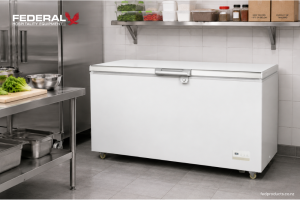
Commercial chest freezers are essential for restaurants, cafés, supermarkets, butcher shops, bakeries, convenience stores, seafood suppliers, and food manufacturers throughout New Zealand. These appliances operate continuously, making them one of the most energy-intensive pieces of equipment in many businesses.
As utility overheads continue to drive operating costs, improving the efficiency of equipment, such as upright solid-door and glass-door freezers, has become an important business strategy. Reducing power usage not only lowers electricity bills but also extends equipment lifespan, improves thermal performance, and supports sustainability goals.
Fortunately, lowering energy expenditure does not require major operational changes. Small improvements in freezer selection, loading practices, maintenance, and temperature management can produce measurable cost savings over time.
Key Takeaways
- Maintain a freezer setpoint of -18°C for safe frozen food storage.
- Inspect lid seals monthly and replace damaged gaskets promptly.
- Maintain at least 10cm of ventilation clearance around the freezer.
- Defrost the cabinet when ice accumulation exceeds 5mm.
- Keep the freezer appropriately stocked to support consistent cold temperatures.
- Schedule preventive maintenance to maintain efficient compressor performance.
What Are the Business Benefits of Reducing Freezer Power Usage?
Reducing freezer electricity consumption is not only about lowering bills. It also helps protect frozen inventory, reduce equipment strain, support food safety, and improve long-term operational performance.
| Benefit | Business Impact |
|---|---|
| Lower power usage | Reduced operating expenses |
| Improved equipment lifespan | Lower repair and replacement costs |
| Stable storage temperatures | Better food protection |
| Reduced environmental impact | Supports sustainability initiatives |
| Higher operational efficiency | Improved profitability |
For businesses operating multiple refrigeration units, even small improvements can generate significant annual cost reductions.
What Is the Most Energy-Efficient Freezer Size for My Business?
Oversized chest freezers for sale consume unnecessary power because larger cabinets require more energy to maintain target temperatures. At the same time, undersized units often become overcrowded, restricting airflow and increasing compressor workload.
The ideal freezer should comfortably accommodate normal inventory levels while allowing room for seasonal fluctuations and business growth.
Typical Capacity Requirements
| Business Type | Capacity Requirement |
|---|---|
| Small Café | Low to Medium |
| Restaurant | Medium to Large |
| Convenience Store | Medium |
| Butcher Shop | Large |
| Supermarket | Very Large |
| Food Manufacturer | High-Volume Storage |
Choosing the correct capacity from the outset helps avoid unnecessary kWh demand throughout the life of the appliance.
Why Freezer Loading Practices Affect Energy Consumption
Freezer loading has a direct impact on temperature stability and compressor workload. The objective is to maintain an even load that supports airflow while providing sufficient thermal stability.
Avoid Underfilling
Partially empty equipment, sourced from the top chest freezer suppliers and manufacturers, loses heat more quickly because there is less frozen mass available to retain cold.
Avoid Overfilling
Overfilled cabinets restrict internal airflow, creating temperature variations and forcing the refrigeration system to work harder.
Practical tip: Keep products organised, avoid blocking airflow paths, and review stock levels regularly during seasonal demand changes.
How Do I Know If My Freezer Seals Are Failing?
Lid seals help prevent warm air from entering the cabinet and cold air from escaping. Damaged seals increase compressor cycling and can raise operating costs.
Common Warning Signs
| Sign | Potential Impact |
|---|---|
| Condensation around lid edges | Air leakage |
| Ice formation near the seal | Temperature instability |
| Visible cracks or tears | Reduced efficiency |
| The lid is not closing correctly | Increased power usage |
| Frequent compressor cycling | Higher operating costs |
Substituting damaged seals is one of the most cost-efficient efficiency improvements available.
When Should a Commercial Chest Freezer Be Defrosted?
Ice accumulation directly reduces freezer efficiency. As frost builds up on internal surfaces, the chest freezer in New Zealand must work intensely to remove heat and preserve storage temperatures. Thick ice also reduces available storage capacity.
Businesses should schedule defrosting whenever ice accumulation exceeds approximately 5mm.
Step-by-Step Defrosting Guide
| Step | Action |
|---|---|
| 1 | Transfer products to temporary frozen storage. |
| 2 | Switch off the freezer. |
| 3 | Open the lid and allow the ice to melt naturally. |
| 4 | Remove water and clean internal surfaces. |
| 5 | Dry the cabinet completely. |
| 6 | Restart the freezer and return products once the temperature stabilises. |
Regular defrosting improves heat transfer efficiency and lowers energy expenditure.
How Do External Environmental Factors Affect Freezer Efficiency?
Freezer placement directly impacts energy consumption.
When these products, supplied by leading chest freezer dealers and distributors, are positioned near ovens, fryers, dishwashers, or direct sunlight, they absorb additional heat from their surroundings. The refrigeration system must then remove that extra heat, increasing operating costs.
Placement Factors That Influence Power Usage
| Factor | Impact |
|---|---|
| Direct sunlight | Increases cooling demand |
| Nearby cooking equipment | Raises cabinet workload |
| Poor ventilation | Reduces efficiency |
| Blocked airflow | Causes overheating |
| Cooler storage areas | Supports efficient operation |
Maintaining at least 10cm of clearance around ventilation areas helps ensure adequate airflow.
What Freezer Temperature Should Businesses Maintain?
The Ministry for Primary Industries (MPI) recommends maintaining frozen foods at temperatures that preserve product quality and safety. For most commercial applications, -18°C is the accepted storage benchmark.
Many operators mistakenly lower temperatures excessively in an attempt to improve food protection. This practice increases energy use in products like undercounter workbench freezers without delivering meaningful benefits.
Temperature Management Goals
| Objective | Benefit |
|---|---|
| Maintain -18°C | Food safety compliance |
| Avoid excessive cooling | Lower power consumption |
| Monitor daily | Early issue detection |
| Maintain consistency | Better product quality |
Monitoring temperatures daily is essential for cost control.
Why Is Preventive Maintenance Essential for Reducing Operating Costs?
Preventive maintenance helps refrigeration systems operate efficiently and reliably. When you buy chest freezers online, you will realise that key components such as the compressor, condenser, and refrigerant charge levels directly influence power consumption.
The compressor circulates the refrigerant, while the condenser releases heat from the system. Poorly maintained equipment consumes more electricity and experiences more frequent breakdowns.
Maintenance Priorities
| Maintenance Task | Efficiency Benefit |
|---|---|
| Clean condenser surfaces | Improved heat removal |
| Check refrigerant charge levels | Optimised cooling performance |
| Inspect door seals | Reduced air leakage |
| Verify thermostat calibration | Accurate temperature control |
| Check ventilation pathways | Improved airflow |
The Energy Efficiency & Conservation Authority (EECA) motivates New Zealand establishments to improve power management through frequent equipment upkeep and monitoring.
Is It Worth Upgrading to a Modern Energy-Efficient Chest Freezer?
Older commercial freezers may continue operating, but they often cost more to run due to weaker insulation, less precise temperature control, and less efficient compressor performance.
Older vs Modern Commercial Chest Freezers
| Feature | Older Models | Modern Models |
|---|---|---|
| Insulation Efficiency | Lower | Higher |
| Compressor Performance | Less Efficient | Energy Optimised |
| Temperature Control | Basic | Precise |
| Power Consumption | Higher | Lower |
| Environmental Performance | Lower | Improved |
Although replacement requires capital investment, long-term operational savings often justify the upgrade to a better commercial chest freezer.
What Does Inefficient Operation Actually Cost?
The difference between an inefficient freezer and an efficient model can be substantial over several years.
Example Annual Energy Cost Comparison
| Energy Rating | Estimated Annual Energy Cost (NZD) |
|---|---|
| 2-Star Equivalent | $1,500 |
| 3-Star Equivalent | $1,250 |
| 4-Star Equivalent | $1,050 |
| 5-Star Equivalent | $850 |
Actual costs vary depending on usage patterns, electricity tariffs, and cabinet size, but higher-efficiency equipment consistently reduces operating expenses.
Daily Freezer Efficiency Checklist
Staff can use the following checklist to maintain efficient operation:
| Daily Check | Complete |
|---|---|
| Lid closes fully | □ |
| Seals are clean and undamaged | □ |
| Products are organised | □ |
| Airflow is unobstructed | □ |
| Temperature remains at -18°C | □ |
| Excessive frost is not present | □ |
| Ventilation areas remain clear | □ |
Common Mistakes That Increase Freezer Electricity Consumption
- Choosing a freezer that is too large for regular stock levels.
- Overfilling the cabinet and restricting internal airflow.
- Leaving the freezer underfilled for long periods.
- Ignoring damaged lid seals or worn gaskets.
- Allowing frost to build up beyond 5mm.
- Placing the freezer near ovens, fryers, dishwashers, or direct sunlight.
- Blocking ventilation areas around the cabinet.
- Setting the temperature colder than required.
- Skipping preventive maintenance.
Frequently Asked Questions
What temperature should a commercial chest freezer maintain?
For most commercial frozen food storage applications, -18°C is the accepted benchmark because it supports food safety and product quality without unnecessary energy use.
Does frost build-up increase electricity consumption?
Yes. Frost reduces heat transfer efficiency and forces the refrigeration system to work harder to maintain storage temperatures.
How often should freezer seals be inspected?
Freezer seals should be checked at least monthly. Cracks, tears, condensation, ice near the seal, or poor lid closure can indicate air leakage.
Why is ventilation clearance important?
Adequate clearance allows heat to escape from the refrigeration system. Poor ventilation increases compressor workload and operating costs.
Is overfilling a commercial chest freezer inefficient?
Yes. Overfilling restricts airflow and creates temperature variation, which can force the refrigeration system to work harder.
Is underfilling a freezer also inefficient?
Yes. Partially empty cabinets have less frozen mass to retain cold, which can make temperatures less stable.
Is upgrading to a modern commercial chest freezer worth it?
In many cases, yes. Modern units often offer better insulation, improved compressor performance, precise temperature controls, and lower long-term operating costs.
Conclusion
Lowering power usage in commercial chest freezers requires a systematic approach rather than a single solution. Proper freezer dimensions, even loading practices, frequent seal checks, routine defrosting, preventive upkeep, and proper temperature control all help in improved operational cost-efficiency.
For New Zealand businesses, maintaining a consistent -18°C storage temperature, following MPI food safety expectations, and adopting EECA-aligned energy management practices can deliver measurable financial and operational benefits. Whether managing a café in Dunedin, a supermarket in Auckland, a butcher shop in Hamilton, or a seafood establishment in Christchurch, increasing the efficiency of products like blast chillers and shock freezers or the titular equipment helps reduce power costs, safeguard stored items, and maximise the long-term value of your products.