Customer Helpline:


Key Features to Look for in a Commercial Kebab Machine

The popularity of kebabs, shawarma, gyros, and vertical rotisserie-cooked foods continues to grow across New Zealand. From takeaway shops in Auckland and Wellington to food trucks in Christchurch and hospitality venues in Queenstown, businesses are investing in professional equipment that can keep up with fast service and consistent customer demand.
Choosing the right commercial kebab machine is an important business decision. The model you select affects cooking consistency, serving speed, food quality, energy use, cleaning time, safety, and long-term operating costs. Whether you are opening a new takeaway shop or upgrading an existing cooking line, understanding the key features of a shawarma machine or doner kebab grill will help you make a more confident investment.
Which Commercial Kebab Machine Is Right for You?
| Factor | What to Consider | Best Choice For |
|---|---|---|
| Capacity | Meat load capacity from smaller 10kg units to larger 80kg+ machines | Match machine size to daily sales volume |
| Power Source | LPG, Natural Gas, or Electric | Depends on site infrastructure and installation requirements |
| Build Quality | Stainless steel construction and commercial-grade components | Long-term durability and easier cleaning |
| Heating Zones | Independent burners or controlled heating elements | Better cooking control and reduced energy waste |
| Cleaning Access | Removable trays and easy-access cooking zones | Lower labour time and better hygiene management |
Why Choosing the Right Commercial Kebab Machine Matters
For many foodservice businesses, the kebab machine is the centrepiece of the operation. Unlike general cooking equipment that supports several menu items, a kebab machine directly influences the quality, speed, consistency, and profitability of every serving sold.
Whether your menu includes doner kebabs, chicken shawarma, lamb gyros, mixed-meat wraps, plates, or takeaway meals, the cooking system affects product texture, browning, heat retention, and service flow. A poorly matched machine can create bottlenecks during peak periods, while the right model supports smoother production and better customer experiences.
Operational Benefits of Choosing the Right Machine
| Business Outcome | Operational Benefit |
|---|---|
| Faster Service | Reduces waiting times during peak ordering periods. |
| Better Meat Quality | Supports even cooking, appealing texture, and consistent presentation. |
| Consistent Cooking | Reduces product waste and improves customer satisfaction. |
| Energy Efficiency | Helps reduce long-term running costs. |
| Easier Cleaning | Reduces labour requirements and supports hygiene procedures. |
| Reliable Performance | Minimises downtime and supports daily service confidence. |
What Capacity Should a Commercial Kebab Machine Have?
Capacity is often misunderstood because it includes two separate considerations: meat load capacity and machine footprint. Meat load capacity refers to how much meat the rotating spit can hold. Commercial units, such as the titular products or pasta and noodle cookers available in New Zealand, may range from smaller 10kg machines to larger models designed for 80kg or more.
The footprint of the kebab machine for sale refers to the physical space required in the kitchen. Food trucks, compact takeaway shops, and small service counters often need a smaller machine, while larger restaurants and busy kebab shops may prioritise higher load capacity.
Typical Capacity Guide
| Business Type | Recommended Meat Capacity |
|---|---|
| Small Takeaway Shop | 10kg–20kg |
| Food Truck | 15kg–30kg |
| Restaurant | 20kg–50kg |
| Busy Kebab Shop | 40kg–60kg |
| High-Volume Operation | 60kg–80kg+ |
Understanding Customer Demand Before Choosing Capacity
Many operators focus on equipment specifications without first understanding real demand. The most practical purchasing decisions begin with daily sales estimates, peak trading periods, lunch rush demand, evening demand, seasonal changes, and expected future growth.
A machine that is too small may struggle during busy periods. A machine that is too large may consume more energy than necessary and take up valuable space. The right model should support today’s demand while allowing room for realistic business growth.
Example Capacity Planning
| Daily Kebab Sales | Suggested Meat Capacity |
|---|---|
| Under 100 serves | 10kg–20kg |
| 100–200 serves | 20kg–40kg |
| 200–400 serves | 40kg–60kg |
| 400+ serves | 60kg+ |
Should You Select a Gas or Electric Kebab Machine?
This is one of the main questions buyers ask. Gas-powered models are widely used in high-volume shops because they deliver strong heat output and recover cooking temperature quickly after fresh meat is loaded. Electric models can be easier to install and may suit locations where gas access is unavailable.
In New Zealand, gas units are usually configured for either Natural Gas or Liquefied Petroleum Gas (LPG), so it is important to check your available connection before purchasing. Electric machines may require standard single-phase power or a higher-powered three-phase electrical supply depending on size and output. For further information, visit the top kebab machine suppliers and manufacturers near you.
Gas vs Electric: Pros and Cons
| Feature | Gas Machine | Electric Machine |
|---|---|---|
| Heat Output | Very high | High |
| Temperature Recovery | Excellent | Good |
| Installation | Requires a gas connection | Often simpler |
| Running Flexibility | Depends on gas supply | More location flexibility |
| High-Volume Suitability | Excellent | Good |
| Initial Setup | More complex | Simpler |
Why Heat Consistency Is More Important Than Maximum Heat Output
Many buyers assume that stronger heat automatically means better performance. In reality, consistent heat distribution is often more important than maximum heat output alone.
A commercial kebab machine should provide stable cooking temperatures, even browning, reliable cooking throughout service, and enough heat recovery to handle busy periods. Uneven heating can lead to overcooked outer layers, undercooked sections, increased food waste, and inconsistent customer experiences.
How Important Are Burner and Heating Zone Controls?
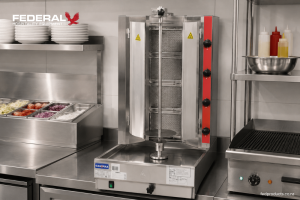
Heating configuration directly affects cooking control. Most commercial shawarma machines use multiple burners or heating elements positioned vertically beside the meat stack.
When you buy a commercial kebab machine online with independently controlled heating zones, staff can apply heat only where needed. This helps improve cooking precision, reduce wasted energy during quieter periods, and manage different meat loads more efficiently.
Heating Zone Features
| Heating Feature | Business Benefit |
|---|---|
| Adjustable Heat Levels | Greater cooking control across different products. |
| Independent Burner Controls | Reduced energy use during slower trading periods. |
| Multiple Heating Zones | More even cooking across the meat stack. |
| Targeted Heating | Better flexibility for smaller loads. |
What Construction Materials Should You Look For?
Commercial kitchens expose equipment to grease, moisture, heat, cleaning chemicals, and constant use. Stainless steel remains the preferred construction material because it withstands these conditions while remaining easier to clean and maintain.
When reviewing gyro cookers, pan-fried machines, or kebab machines in New Zealand, look for a high-performance stainless-steel design, reinforced frames, and commercial-grade internal components.
Construction Features Worth Prioritising
| Construction Feature | Benefit |
|---|---|
| Stainless Steel Body | Long-term durability and easier cleaning. |
| Corrosion Resistance | Suitable for New Zealand kitchen environments. |
| Reinforced Frame | Greater stability during daily operation. |
| Commercial-Grade Parts | Longer service life and more reliable performance. |
| Smooth Surfaces | Easier cleaning and better sanitation. |
How Much Time Will Cleaning Take?
Cleaning requirements directly affect labour costs and food safety compliance. New Zealand food businesses must maintain strict hygiene practices in line with Ministry for Primary Industries (MPI) food safety requirements.
Equipment that is difficult to clean increases labour time and can raise the risk of contamination. Look for machines with easy access to cooking areas, removable drip trays, smooth stainless surfaces, and accessible internal components.
Daily Maintenance Checklist
| Task | Frequency |
|---|---|
| Empty and Clean Drip Trays | Daily |
| Wipe Stainless Steel Surfaces | Daily |
| Remove Grease Build-Up | Daily |
| Check Burner Operation | Daily |
| Inspect Electrical Connections | Weekly |
| Deep Clean Internal Components | Weekly |
Cleaning Features Worth Having
| Feature | Benefit |
|---|---|
| Removable Drip Trays | Faster cleaning after service. |
| Accessible Cooking Zones | Easier maintenance and inspection. |
| Stainless Steel Finish | Improved sanitation and durability. |
| Easy-Access Components | Faster servicing and reduced downtime. |
How Energy Efficient Should a Kebab Machine Be?
Energy expenses remain a major operating cost for hospitality businesses throughout New Zealand. Machines sourced from leading commercial kebab machine dealers and distributors, with independently controlled burners, efficient heating systems, and well-designed heat distribution, usually consume less energy while maintaining cooking performance.
| Energy-Saving Feature | Benefit |
|---|---|
| Independent Burner Control | Reduces unnecessary energy use. |
| Efficient Heating Systems | Helps lower operating costs. |
| Better Heat Retention | Improves overall efficiency. |
| Zoned Heating | Limits energy use during quieter periods. |
What Safety Features Should You Look For?
Safety features protect staff, customers, and the business. For gas-powered models, flame failure protection is essential. This system automatically cuts off the gas supply if the flame or pilot light goes out, helping reduce gas leak risks.
When purchasing equipment in New Zealand, such as the titular products and commercial ovens, ensure it complies with relevant NZ Gas Safety Regulations and applicable AS/NZS electrical standards.
Important Safety Features
- Flame failure protection systems
- Stable, anti-tip construction
- Heat-resistant handles and controls
- Protected electrical wiring
- Easy-access emergency controls
- Commercial-grade gas regulators and fittings
Common Mistakes When Buying a Commercial Kebab Machine
| Common Mistake | Potential Problem | Better Approach |
|---|---|---|
| Choosing Based on Price Alone | Higher operating costs or reduced lifespan. | Compare durability, heat performance, cleaning access, and support. |
| Ignoring Capacity Requirements | Machine may struggle during busy periods. | Base capacity on peak demand, not quiet trading periods. |
| Overlooking Site Infrastructure | Installation delays or unexpected costs. | Check gas, power, ventilation, and space before purchase. |
| Ignoring Cleaning Requirements | Higher labour time and hygiene risks. | Choose easy-access cooking zones and removable drip trays. |
| Failing to Plan for Growth | Early equipment replacement. | Select a machine that supports realistic future demand. |
Buyer Checklist Before Purchasing
- Confirm daily serving volume.
- Estimate peak lunch and evening demand.
- Choose suitable meat capacity.
- Check available kitchen space.
- Confirm gas or electrical infrastructure.
- Review heating zone controls.
- Prioritise stainless steel construction.
- Check cleaning accessibility.
- Compare energy efficiency features.
- Review safety systems.
- Confirm New Zealand compliance requirements.
- Check warranty and service support.
Conclusion
The best commercial kebab machine is the one that matches your customer volume, utilities, kitchen layout, menu style, cleaning routine, and long-term business goals. Capacity, heating performance, construction quality, cleaning access, energy efficiency, and safety systems all deserve careful consideration before purchase.
Whether you are choosing a shawarma machine for a food truck, a doner kebab grill for a takeaway shop, or a large vertical rotisserie for a busy restaurant, the right investment helps deliver consistently cooked meat, smoother service, and lower long-term operating costs.
By evaluating your requirements carefully, New Zealand foodservice operators can invest in equipment that supports product quality, daily efficiency, customer satisfaction, and sustainable business growth.
FAQs: Commercial Kebab Machines
1. What size commercial kebab machine do I need?
The right size depends on daily sales, peak demand, and future growth. Smaller businesses may require 10kg–20kg capacity, while high-volume operators may need 60kg or more.
2. Are gas kebab machines better than electric models?
Gas machines generally provide stronger heat output and faster recovery, while electric models offer easier installation and more location flexibility. The best choice depends on site infrastructure and service volume.
3. Why are independent burner controls important?
Independent burner controls allow operators to apply heat only where needed, improving cooking consistency and reducing unnecessary energy use.
4. What material is best for a commercial kebab machine?
Stainless steel is generally preferred because it offers durability, corrosion resistance, hygiene benefits, and easier cleaning in commercial kitchens.
5. How often should a kebab machine be cleaned?
Drip trays, stainless steel surfaces, grease areas, and cooking zones should be cleaned daily, with deeper internal cleaning performed regularly according to usage and manufacturer guidance.
6. What safety features should a kebab machine include?
Important safety features include flame failure protection, stable construction, heat-resistant handles, protected wiring, emergency controls, and commercial-grade gas or electrical components.
-
 Gasmax Semi-automatic 4 Burner LPG Kebab Machine - KB-4LPGNZ$2,009.00 (Excl. GST)
 -

-
 GasMax Semi-automatic 3 Burner LPG Kebab Machine - KB-3LPGNZ$1,717.00 (Excl. GST)
 -
 GasMax Semi-automatic 3 Burner NG Kebab Machine KB-3NZ$2,079.00 (Excl. GST)
 -
 GasMax Semi-automatic 5 Burner NG Kebab Machine KB-5NZ$2,694.00 (Excl. GST)