Customer Helpline:


A Practical Guide to Choosing Commercial Kitchen Equipment for New Restaurants in New Zealand

Opening a new restaurant in New Zealand requires careful planning, especially when selecting commercial kitchen equipment. Whether you operate a café in Auckland, a takeaway outlet in Christchurch, a hotel kitchen in Queenstown, or a restaurant in Wellington, the equipment you choose directly affects food quality, preparation speed, staff efficiency, operating costs, and long-term profitability.
Many new restaurant owners focus heavily on branding, menu design, and customer-facing interiors while overlooking the operational reality of the kitchen. Poor commercial kitchen equipment choices directly slow service, increase labour costs, raise energy consumption, and create operational delays during the busiest service periods. This practical guide explains how New Zealand food businesses can choose reliable, energy-efficient, and regulation-compliant restaurant pantry tools that support long-term operational stability.
Quick Takeaways: What Matters Most When Choosing Restaurant Equipment?
| Priority Area | Why It Matters |
|---|---|
| Kitchen Workflow | Improves staff movement and preparation speed |
| Energy Efficiency | Reduces electricity and gas expenses |
| Appliance Durability | Minimises breakdowns and replacement costs |
| Food Safety Compliance | Supports New Zealand hygiene regulations |
| Long-Term Value | Lowers total ownership costs over time |
| Local Service Support | Ensures faster repairs and maintenance |
How Do I Choose Equipment for My Specific Restaurant Concept?
The type of food business you operate determines the professional culinary hardware you need. Equipment selection should always match menu requirements, production volume, and available pantry space.
A small café requires compact refrigeration, display cabinets, and coffee machines, while a bakery depends on dough mixers, proofers, and deck ovens. Fast-food businesses need high-capacity fryers and griddles that can maintain consistent output during busy trading periods.
Understanding your restaurant's model before purchasing commercial kitchen equipment for sale prevents unnecessary spending and improves operational efficiency.
| Restaurant Type | Essential Equipment Priorities |
|---|---|
| Café | Coffee machines, display fridges, compact ovens |
| Fast Food Outlet | Fryers, griddles, and preparation counters |
| Fine Dining Restaurant | Precision cooking systems, premium refrigeration |
| Bakery | Dough mixers, deck ovens, proofers |
| Catering Business | High-capacity refrigeration and food preparation units |
New restaurant owners should focus only on machines that directly support menu production and daily service requirements.
Why Is Kitchen Workflow Important in a Commercial Kitchen?
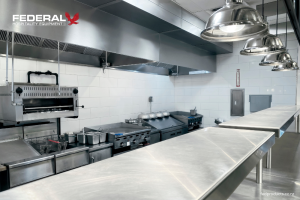
Kitchen workflow determines how efficiently staff move between storage, preparation, cooking, plating, and cleaning stations. Poor workflow design creates operational delays, increases staff fatigue, and slows food preparation. Every commercial kitchen should support a logical movement pattern that minimises unnecessary walking and reduces congestion during the busiest service periods.
Food preparation equipment should remain close to refrigeration units, while cooking stations should connect efficiently to plating areas. Dishwashing zones should remain separate from food preparation spaces to support hygiene compliance. A workflow-focused kitchen design improves productivity, reduces stress for kitchen staff, and supports faster customer service.
For further information, visit the top commercial kitchen equipment suppliers and manufacturers in your area.
| Kitchen Area | Recommended Equipment |
|---|---|
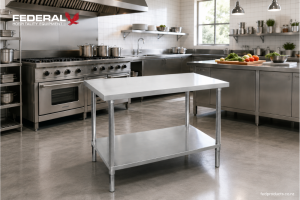
| Food Preparation | Stainless steel benches, vegetable preparation machines |
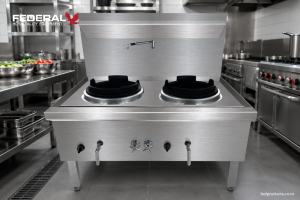
| Cooking Zone | Commercial ovens, cooktops, fryers |
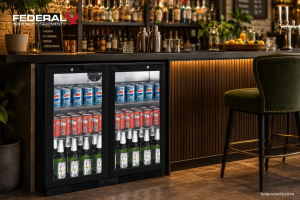
| Refrigeration Area | Upright fridges, underbench refrigeration |
| Cleaning Section | Commercial dishwashers, sinks |
| Storage Area | Shelving systems, cool rooms |
Why Should I Invest in Energy-Efficient Kitchen Equipment?
Energy-efficient food service appliances significantly reduce operating costs for New Zealand restaurants.
Commercial kitchens consume large amounts of electricity and gas through refrigeration, cooking systems, lighting, and dishwashing appliances. Energy-efficient appliances reduce monthly utility expenses while supporting sustainability expectations among New Zealand consumers. Induction cooktops have become increasingly popular because they heat faster than traditional gas systems, deliver precise temperature control, and reduce excess heat inside the kitchen.
Commercial catering equipment, such as refrigeration systems fitted with inverter compressors, also improves efficiency. An inverter compressor automatically adjusts cooling output to match demand, rather than running continuously at full power, reducing electricity consumption.
| Product Type | Energy-Efficient Features |
|---|---|
| Commercial Refrigeration | Improved insulation, inverter compressors |
| Induction Cooktops | Faster heating, reduced energy waste |
| Dishwashers | Water-saving rinse systems |
| Combination Ovens | Shorter cooking times |
| Display Cabinets | Energy-efficient lighting systems |
Light-Emitting Diode (LED) lighting systems also reduce electricity use compared to traditional lighting in display cabinets and refrigeration units.
Should I Choose Gas or Induction Cooking?
Both gas and induction systems offer advantages depending on your menu, kitchen setup, and operating priorities.
| Cooking System | Advantages | Limitations |
|---|---|---|
| Gas Cooking | Familiar cooking method, visible flame control, and lower installation cost | Produces more heat, higher energy waste |
| Induction Cooking | Faster heating, improved efficiency, cooler kitchen environment | Higher initial purchase cost |
| Gas Cooking | Compatible with most cookware | Requires stronger ventilation systems |
| Induction Cooking | Easier cleaning and temperature precision | Requires induction-compatible cookware |
When you buy commercial kitchen equipment online, such as induction systems, they improve energy efficiency and reduce kitchen temperatures. At the same time, gas cooking remains common in restaurants requiring high-heat flame cooking.
Why Does Warranty and Service Support Matter?
After-sales support is equally important when selecting industrial food service appliances.
Restaurant owners should focus on suppliers with servicing points in premier New Zealand cities such as Auckland, Wellington, and Christchurch. Fast access to replacement parts and qualified technicians reduces downtime when equipment failures occur.
Warranty coverage also reduces repair costs and enhances operational security for new businesses.
| Buying Factor | Long-Term Impact |
|---|---|
| Low Initial Purchase Cost | Increased repair frequency |
| Energy Efficiency | Reduced utility expenses |
| Quality Construction | Longer equipment lifespan |
| Local Service Support | Faster maintenance response |
| Warranty Coverage | Lower servicing costs |
How Do I Calculate Commercial Refrigeration Capacity?
Refrigeration capacity should match ingredient volume, delivery schedules, and expected customer demand.
Restaurants that receive weekly deliveries require larger storage systems than those that receive daily fresh produce shipments. Insufficient refrigeration space creates overcrowding, inconsistent cooling, and increased food spoilage. You can gain further insights by checking out the leading commercial kitchen equipment dealers and distributors.
| Refrigeration Type | Best Use |
|---|---|
| Upright Fridges | Bulk ingredient storage |
| Underbench Fridges | Quick-access preparation stations |
| Display Cabinets | Customer-facing food display |
| Commercial Freezers | Frozen food storage |
| Cool Rooms | High-volume storage |
Restaurant owners should calculate refrigeration requirements based on projected service volume rather than current demand alone.
What Food Safety Regulations Apply to Commercial Kitchens in New Zealand?
New Zealand Compliance Checklist for Commercial Kitchens
| Compliance Area | What to Check |
|---|---|
| Food Safety | Compliance with the New Zealand Food Act 2014 |
| Ventilation | NZS 4303:1990 ventilation standards |
| Energy Efficiency | Energy Star-rated equipment, where available |
| Electrical Safety | Certified commercial electrical systems |
| Hygiene Materials | Stainless steel preparation surfaces |
| Refrigeration Performance | Consistent temperature control systems |
How Often Should Commercial Kitchen Equipment Be Serviced?
Regular maintenance protects operational stability and extends equipment lifespan.
| Equipment Type | Recommended Maintenance Frequency |
|---|---|
| Commercial Fryers | Oil filtration and cleaning daily |
| Refrigeration Systems | Condenser coil cleaning every 3–6 months |
| Dishwashers | Internal cleaning weekly |
| Ventilation Systems | Professional cleaning every 6–12 months |
| Combination Ovens | Professional servicing annually |
Preventive maintenance reduces emergency repair costs and improves operational reliability.
Conclusion
Choosing commercial cooking equipment requires careful planning, practical budgeting, and a strong understanding of operational requirements. New Zealand restaurant owners should prioritise workflow efficiency, space planning, energy performance, food safety compliance, durability, and long-term servicing support before purchasing equipment.
Reliable, energy-efficient, and well-planned commercial kitchen systems improve operational stability, reduce ongoing costs, and support consistent customer service throughout every stage of restaurant growth.
FAQs: Choosing Commercial Kitchen Equipment in New Zealand
1. What commercial kitchen equipment does a new restaurant need?
A new restaurant usually needs preparation benches, refrigeration, cooking equipment, dishwashing systems, storage solutions, and food safety-compliant surfaces. The exact equipment depends on the restaurant concept and menu.
2. Why is kitchen workflow important when buying equipment?
Good workflow helps staff move efficiently between storage, preparation, cooking, plating, and cleaning areas. This reduces delays, improves service speed, and supports better hygiene control.
3. Should new restaurants choose energy-efficient equipment?
Yes. Energy-efficient refrigeration, induction cooktops, dishwashers, ovens, and display cabinets help reduce electricity and gas expenses over time.
4. Is gas or induction cooking better for restaurants?
Gas is familiar and useful for high-heat flame cooking, while induction offers faster heating, improved energy efficiency, cleaner operation, and a cooler kitchen environment.
5. How much refrigeration capacity does a restaurant need?
Refrigeration capacity should be based on menu size, ingredient volume, delivery frequency, projected service demand, and future business growth.
6. How often should commercial kitchen equipment be serviced?
Maintenance frequency depends on the equipment type. Fryers need daily oil care, refrigeration systems need condenser cleaning every 3–6 months, and ventilation systems often need professional cleaning every 6–12 months.